Remote Social Media Marketing Jobs: Complete 2026 Career Guide
Everything you need to land a remote social media marketing job. Platform strategy, community building, content creation - salary data, interview questions, and companies hiring.
Updated January 20, 2026 • Verified current for 2026
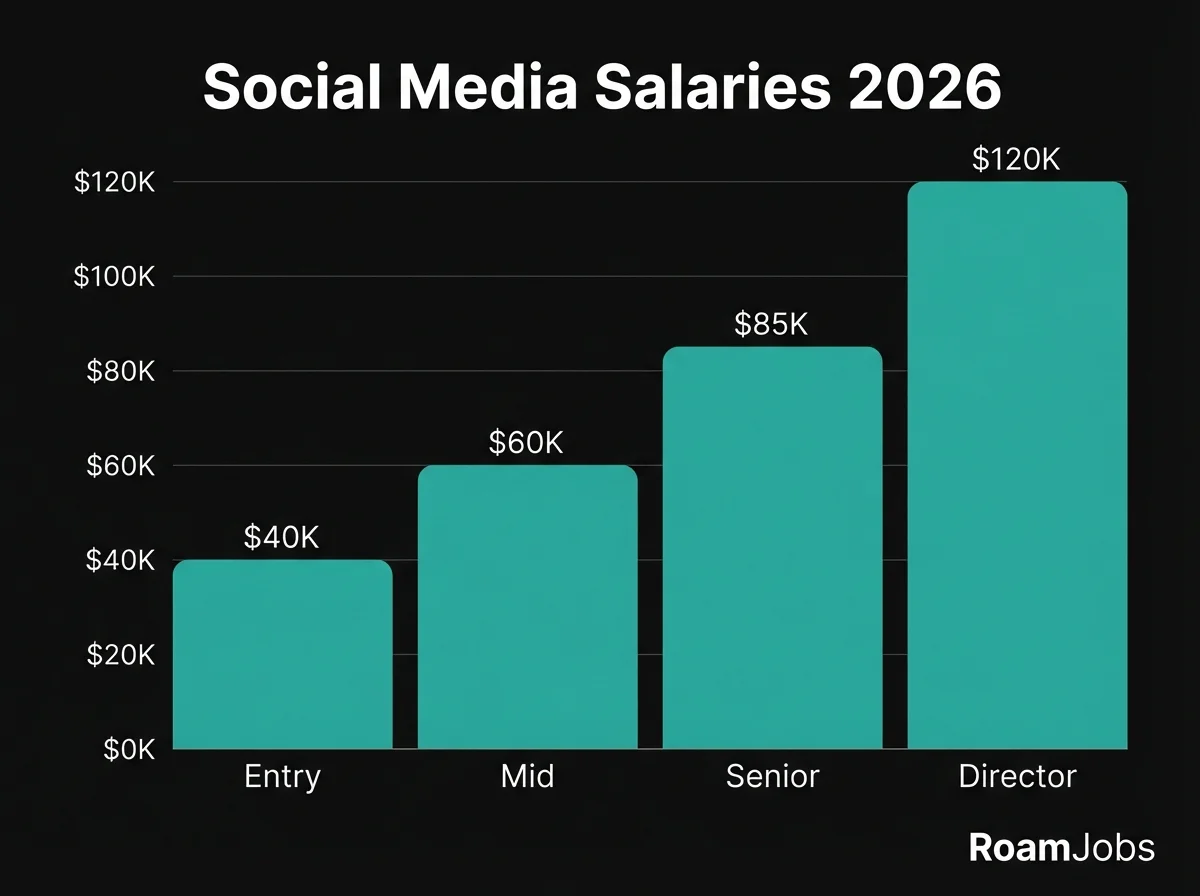
Remote social media marketers build brand presence, engage communities, and drive business results across platforms like Instagram, LinkedIn, TikTok, X (Twitter), and YouTube. Salaries range from $45,000 to $175,000 depending on experience and specialization, with content creators and community managers at the entry level and Social Media Directors commanding top compensation. Success in this role requires a unique blend of creative storytelling, data analysis, cultural awareness, and rapid adaptability to platform algorithm changes. Social media marketing is exceptionally well-suited for remote work because the platforms themselves are digital, content can be created from anywhere, and community engagement happens online by nature.
What Do Remote Social Media Marketers Actually Do?
Remote social media marketers are responsible for building and maintaining a brand’s presence across social platforms, engaging with audiences, creating compelling content, and driving measurable business outcomes. Unlike broader marketing roles, social media marketers live and breathe the platforms—understanding algorithmic nuances, cultural trends, and community dynamics that make content resonate.
Day-to-Day Responsibilities
A typical week for a remote social media marketer involves a dynamic mix of creative and analytical work that varies by company size, industry, and seniority.
Content creation and scheduling
Creating social media content is the most visible part of the role. This includes writing copy for posts across multiple platforms, designing graphics using tools like Canva, editing short-form video content for TikTok, Reels, and Shorts, and adapting content for each platform’s unique format and audience. Remote social media marketers use scheduling tools like Buffer, Later, or Hootsuite to plan and automate posting across time zones.
Community management
Engaging with your audience goes far beyond posting content. You respond to comments and direct messages, moderate discussions, handle customer service inquiries that come through social channels, and build relationships with community members. Effective community management creates brand advocates who amplify your message organically. In remote settings, this work happens through dedicated social media management platforms that centralize all interactions.
Platform strategy and content planning
Social media success requires strategic thinking about what content to create for which platforms. You develop content calendars, plan campaigns around product launches or cultural moments, identify trending topics and sounds to leverage, and ensure content aligns with broader marketing objectives. This planning happens collaboratively through shared documents, Figma boards, or project management tools.
Analytics and reporting
Data drives social media strategy. You track engagement rates, follower growth, reach, impressions, and conversion metrics across platforms. You analyze what content performs best, identify patterns, and use insights to optimize future content. Monthly or weekly reports communicate results to stakeholders and justify budget allocation.
Influencer partnerships and collaborations
Many social media roles involve identifying, vetting, and managing relationships with influencers, content creators, and brand partners. This includes negotiating partnerships, coordinating content creation, ensuring FTC compliance, and measuring campaign performance. Remote coordination with influencers requires clear briefs, organized communication, and reliable tracking systems.
Paid social advertising
Increasingly, social media marketers manage paid campaigns alongside organic content. This includes boosting high-performing posts, creating targeted ad campaigns, managing budgets, A/B testing creative and copy, and optimizing for conversion goals. The line between organic social and paid social continues to blur.
Social Media Marketing vs Adjacent Roles
Understanding how social media marketing relates to other marketing specializations helps you position yourself in the job market.
Social Media Manager focuses on day-to-day content creation, community engagement, and platform management. This generalist role handles everything from writing posts to responding to comments to pulling analytics. Most suited for those who love the creative and community aspects.
Content Creator/Social Media Creator specializes in producing high-quality visual content—photos, graphics, videos—for social platforms. Less focused on strategy and community management, more focused on creative production. Often works across multiple brands as a freelancer or contractor.
Community Manager focuses specifically on building and nurturing online communities, whether on social platforms or owned channels like Discord, Slack, or forums. More emphasis on member relationships and community health than content creation.
Social Media Strategist focuses on high-level planning, campaign architecture, and performance optimization rather than hands-on content creation. This role typically exists at larger companies or agencies and requires more experience.
Influencer Marketing Manager specializes in partnerships with creators and influencers. Heavy focus on relationship management, contract negotiation, and campaign coordination. May or may not handle organic social content.
Why Social Media Marketing Is Ideal for Remote Work
Social media marketing is naturally suited for remote work for several compelling reasons.
The work is inherently digital
Everything about social media marketing happens online. The platforms you’re managing are digital, the tools you use are cloud-based, and the communities you’re engaging live on the internet. There’s no physical component that requires office presence.
Flexible creative work
Content creation benefits from the flexibility remote work provides. You can capture content during golden hour wherever you are, edit video from a coffee shop, or write copy during your most creative hours. The output matters more than where or when you create it.
Global audience alignment
Social media audiences are global, and remote work often gives you flexibility to engage during different time windows. A marketer in Europe can effectively manage US-focused accounts, and vice versa, with proper scheduling and planning.
Real-time responsiveness
Social media requires monitoring and responding to trends and conversations as they happen. Remote work doesn’t hinder this—if anything, it allows for more flexible coverage since you can check notifications from anywhere without being tied to an office schedule.
Measurable output
Social media work produces clear, measurable results. Engagement rates, follower growth, and content performance are transparent regardless of where the work was done. This makes it easy to demonstrate value without in-person visibility.
Role Overview: Core Competencies
Remote social media marketers need diverse skills spanning creative, analytical, and interpersonal domains. These core competencies form the foundation of effective social media work.
Platform Management
Mastering multiple platforms is essential for social media marketers. Each platform has unique algorithms, content formats, audience behaviors, and best practices.
Instagram remains central to brand social presence, with Feed posts, Stories, Reels, and direct messaging all requiring different approaches. Understanding hashtag strategy, optimal posting times, Reels algorithm priorities, and story engagement tactics is essential.
TikTok has transformed social media marketing with its algorithm-driven content discovery. Success requires understanding trending sounds, participating in challenges authentically, creating native content that doesn’t feel like advertising, and adapting quickly to platform changes.
LinkedIn is crucial for B2B brands and personal branding. The platform rewards thought leadership, professional insights, and authentic engagement. Understanding LinkedIn’s algorithm preferences for conversation-generating content helps maximize reach.
X (Twitter) demands quick wit, timely commentary, and the ability to engage in real-time conversations. The platform’s text-first nature requires strong copywriting skills and cultural awareness.
YouTube involves longer-form content strategy, from Shorts to full-length videos. Understanding YouTube SEO, thumbnail optimization, and watch time metrics is increasingly important as video dominates.
Facebook remains relevant for certain audiences and community building through Groups. Understanding its declining organic reach and the importance of paid amplification for business content is crucial.
Pinterest serves as a visual search engine with unique content longevity. Brands in lifestyle, home, fashion, and food industries benefit from Pinterest strategy expertise.
Community Building
Building genuine community goes beyond accumulating followers. Effective community managers create spaces where people feel connected to the brand and each other.
Engagement strategy involves proactively starting conversations, responding thoughtfully to comments, and creating content that invites participation. Rather than broadcasting messages, you facilitate dialogue.
Crisis management requires recognizing when negative sentiment is building, responding appropriately to criticism, and knowing when to escalate issues. Remote social media managers need clear escalation protocols since they cannot simply walk to a colleague’s desk.
User-generated content cultivation encourages customers to create and share content featuring your brand. This requires building relationships, creating share-worthy experiences, and effectively repurposing customer content with proper permissions.
Brand voice development means establishing and maintaining consistent personality across all interactions. The best social media managers make brands feel human and relatable while staying true to brand guidelines.
Content Creation
Creating compelling content across formats is fundamental to social media success.
Visual content includes static graphics, carousels, and photo content optimized for each platform. Tools like Canva have democratized design, but understanding visual hierarchy, brand consistency, and platform-specific formats remains crucial.
Video content has become dominant across platforms. Social media marketers must be comfortable with short-form video creation, from filming and editing to understanding trends and sounds. Tools like CapCut enable professional editing from anywhere.
Copywriting for social requires adapting tone and length to each platform while maintaining brand voice. Writing compelling hooks, crafting calls-to-action, and telling stories within character limits demands specific skills.
Content adaptation means creating platform-native versions of content rather than simply cross-posting. A TikTok should feel like a TikTok, not a repurposed Instagram Reel or YouTube Short.
Influencer Partnerships
Working with creators and influencers extends brand reach and credibility.
Identification and vetting involves finding influencers whose audience, values, and content style align with your brand. This requires research beyond follower counts into engagement quality, audience demographics, and brand safety considerations.
Relationship management means building genuine partnerships rather than transactional one-offs. Long-term brand ambassadorships typically outperform one-time sponsored posts.
Campaign coordination requires clear briefs, organized communication (challenging across time zones), review processes, and compliance with FTC disclosure guidelines.
Performance measurement means tracking whether influencer partnerships deliver results beyond vanity metrics. Attribution models, unique discount codes, and tracked links help measure ROI.
Seniority Breakdown: From Junior to Director
Understanding expectations at each career level helps you assess where you are, identify skill gaps, and plan advancement. Salary data represents remote positions with US-based companies.
Social Media Marketing Salary by Experience & Location
| Level |  US Remote US Remote |  EU Remote EU Remote | 🌎 LATAM | 🌏 Asia |
|---|---|---|---|---|
| Entry Level (0-2 yrs) | $45,000 - $62,000 | $32,000 - $45,000 | $15,000 - $32,000 | $12,000 - $28,000 |
| Mid-Level (2-5 yrs) | $65,000 - $92,000 | $45,000 - $68,000 | $28,000 - $52,000 | $22,000 - $45,000 |
| Senior (5-8 yrs) | $92,000 - $130,000 | $65,000 - $95,000 | $45,000 - $75,000 | $38,000 - $68,000 |
| Director (8+ yrs) | $120,000 - $175,000 | $85,000 - $128,000 | $62,000 - $98,000 | $52,000 - $88,000 |
* Salaries represent base compensation for remote positions. Actual compensation may vary based on company, experience, and specific location within region.
Essential Skills and Tools
Success as a remote social media marketer requires mastering both craft skills and the tools that enable effective distributed work. Here’s what you need to know.
Social Media Management Tools
Social Media Management Tool Comparison
Source: RoamJobs Social Media Tools Survey 2026| Tool | Best For | Key Features | Pricing | Learning Curve |
|---|---|---|---|---|
| Buffer | Small teams, beginners | Simplest interface | $6-120/mo | Low |
| Hootsuite | Enterprise, large teams | Comprehensive analytics | $99-739/mo | Medium |
| Sprout Social | Agency, reporting focus | Best analytics | $249-499/mo | Medium |
| Later | Visual content, Instagram | Visual content calendar | $18-80/mo | Low |
| Brandwatch | Enterprise social listening | Deep social intelligence | Custom pricing | High |
Data compiled from RoamJobs Social Media Tools Survey 2026. Last verified January 2026.
Buffer excels for individuals and small teams needing straightforward scheduling and basic analytics. Its clean interface makes it easy to learn, and the free tier works for personal use. Ideal for those just starting or managing a small number of accounts.
Hootsuite provides comprehensive platform management for larger teams. Strong team collaboration features, approval workflows, and integrations make it suitable for enterprise use. The learning curve is steeper, but capabilities are broader.
Sprout Social stands out for analytics and reporting. If your role involves significant stakeholder reporting or you need deep insights into performance, Sprout’s analytics are industry-leading. Also strong for customer service integration.
Later specializes in visual content management, particularly for Instagram. The visual content calendar makes planning image-heavy feeds intuitive. Strong for brands where aesthetics and visual cohesion matter most.
Brandwatch provides enterprise-level social listening and intelligence. When you need to monitor brand sentiment, track competitors, or identify emerging trends across the social web, Brandwatch offers unmatched depth.
Content Creation Tools
Content Creation Tool Comparison
Source: RoamJobs Content Tools Survey 2026| Tool | Best For | Platform | Cost | Skill Level |
|---|---|---|---|---|
| Canva | Graphics, templates | Web, mobile | Free-$150/yr | Beginner |
| CapCut | Short-form video | Mobile, desktop | Free | Beginner-Medium |
| Figma | Custom design work | Web, desktop | Free-$15/mo | Medium-Advanced |
| Adobe Creative Suite | Professional production | Desktop | $55/mo | Advanced |
| Descript | Video/podcast editing | Desktop | $12-24/mo | Medium |
Data compiled from RoamJobs Content Tools Survey 2026. Last verified January 2026.
Canva has become the standard tool for social media graphics. Its template library, brand kit features, and intuitive interface enable quick creation of professional-looking content. Most social media roles expect Canva proficiency.
CapCut dominates short-form video editing. From basic cuts to advanced effects, transitions, and trending templates, CapCut enables mobile-first video creation that feels native to TikTok and Reels.
Figma serves social media marketers who need more design control than Canva provides. Custom templates, brand systems, and collaboration features make it valuable for teams with specific visual standards.
Adobe Creative Suite remains the professional standard for high-quality creative production. While overkill for basic social posts, Photoshop, Premiere Pro, and After Effects enable premium content creation.
Descript revolutionizes video and podcast editing with transcript-based editing. Edit video by editing text, making it faster to produce content featuring speech or interviews.
Analytics and Reporting Tools
Understanding performance data drives social media strategy.
Native platform analytics (Instagram Insights, TikTok Analytics, LinkedIn Analytics) provide baseline metrics. Master these first—they’re free, authoritative, and essential.
Google Analytics tracks traffic driven to websites from social channels. Understanding how social contributes to web traffic and conversions is crucial for demonstrating business value.
Sprout Social or Hootsuite analytics provide cross-platform reporting, competitor benchmarking, and historical trend analysis beyond what native tools offer.
Social listening tools like Brandwatch, Sprinklr, or Mention track brand mentions, sentiment, and industry conversations across the social web.
Skills by Seniority Level
Entry-level must-haves:
- Platform fluency across Instagram, TikTok, LinkedIn, X
- Basic graphic design in Canva
- Short-form video creation and editing
- Copywriting for social formats
- Scheduling tool proficiency
- Basic analytics interpretation
- Written communication for brand voice
Mid-level additions:
- Content strategy development
- Advanced video production
- Community management at scale
- Influencer partnership coordination
- Paid social advertising basics
- Cross-platform campaign planning
- Reporting and stakeholder communication
- Trend identification and rapid response
Senior-level additions:
- Multi-platform strategy architecture
- Team leadership and mentorship
- Budget management and ROI tracking
- Crisis communication protocols
- Executive-level presentation
- Vendor and agency management
- Emerging platform evaluation
- Industry thought leadership
Director-level additions:
- Department building and scaling
- Organizational strategy alignment
- Executive partnership and influence
- Large-scale budget optimization
- Talent development and team culture
- Board-level reporting
- Industry representation
Companies Hiring Remote Social Media Marketers
The remote social media job market spans startups, established tech companies, agencies, and direct-to-consumer brands. Research each company’s social media presence and remote work culture before applying.
Remote-First Companies with Strong Social Teams
Buffer The social media scheduling company practices what it preaches with a fully distributed team and transparent culture. Social media marketers work on Buffer’s own social presence and content marketing. Known for 4-day workweek and exceptional work-life balance. Strong fit for those who want to live and breathe social media.
Zapier Workflow automation platform with 500+ remote employees across 40+ countries. Social media roles focus on B2B content and community building. Known for excellent async communication practices and no-meeting Wednesdays.
GitLab Fully remote company with exceptional documentation practices. Social media marketers help communicate with the developer community. Their public handbook provides insight into exactly how the company operates.
Automattic (WordPress, WooCommerce, Tumblr) Over 1,900 distributed employees with diverse social media needs across product lines. Experience working on major platforms with massive audiences. Strong async culture with annual team meetups.
HubSpot CRM platform with @flex work arrangements. Large marketing team with social media specialists across brand, product, and audience segments. Known for investing in employee development.
ConvertKit Email marketing platform with fully remote team. Social media roles focus on creator-focused content and community building. Profit-sharing model and strong async culture.
Tech Companies with Remote Social Media Teams
Canva The design tool company hires social media marketers who understand visual content deeply. Remote-friendly with teams across time zones. Unique opportunity to market a tool you use daily.
Shopify E-commerce platform with “digital by default” policy. Social media roles span merchant marketing, brand presence, and product announcements. Large team with diverse opportunities.
Webflow Visual web development platform with strong design culture. Social media marketers help reach designers and developers. Remote-friendly with emphasis on quality over quantity.
Notion Productivity workspace with design-led approach to marketing. Social media work focuses on product education and community building. High-quality content expectations.
Figma Design collaboration tool with strong social presence. Opportunities to engage with creative community and showcase product capabilities through content.
Airtable Database/spreadsheet hybrid with growing marketing team. Social media roles focus on B2B content and use case education.
Consumer Brands Hiring Remote Social Media
Glossier Beauty brand with famously strong social media presence. Opportunities to work on consumer-focused content and community building. Remote-friendly for marketing roles.
Away Travel brand with lifestyle-focused social content. Remote marketing team creates aspirational travel content and manages community engagement.
Warby Parker Eyewear brand with strong D2C presence. Social media marketers balance brand building with product promotion.
Allbirds Sustainable footwear brand with values-driven marketing. Social media roles incorporate sustainability messaging and community building.
Athletic Greens Nutrition company with creator-driven marketing approach. Social media marketers coordinate influencer content and community engagement.
Agencies with Remote Social Media Positions
VMLY&R Global agency with remote-friendly creative and social teams. Work across multiple clients and industries. Good for gaining breadth of experience.
Huge Digital agency with distributed capabilities. Enterprise clients and large-scale social campaigns. Strong training and career development.
VaynerMedia Gary Vaynerchuk’s agency known for social media expertise. Fast-paced environment with significant remote options. Great for those wanting agency experience.
Socialfly Social media-focused agency with remote-first culture. Specialize in influencer marketing and social campaigns for consumer brands.
How to Find Unlisted Opportunities
Many social media positions never appear on major job boards. Here’s how to uncover hidden opportunities.
Twitter/X and LinkedIn networking: Social media hiring managers often post opportunities on their own social channels before formal job postings. Follow marketing leaders at target companies and engage authentically with their content.
Industry communities: Join Slack and Discord communities for social media marketers. Superpath, Marketing Twitter, and brand-specific communities often share opportunities before public posting.
Direct brand outreach: If you admire a brand’s social presence, reach out directly with specific observations about their strategy and how you could contribute. This proactive approach stands out.
Agency relationships: Building relationships with agencies in your target industry can lead to both agency positions and introductions to in-house roles at their clients.
Personal brand building: Growing your own social presence demonstrates your skills and attracts opportunities. Hiring managers find candidates through their content.
Interview Deep Dive
Remote social media marketing interviews typically span 3-5 rounds over 2-4 weeks. Understanding each stage helps you prepare effectively.
Interview Process Overview
Stage 1: Recruiter screen (30 minutes) Initial conversation covering your background, interest in the role, salary expectations, and remote work experience. The recruiter assesses basic fit and communication skills.
Stage 2: Hiring manager interview (45-60 minutes) Deeper discussion of your experience, portfolio highlights, and approach to social media. The hiring manager evaluates your strategic thinking and cultural fit.
Stage 3: Portfolio or content review (45-60 minutes) Presentation of your best work and discussion of your creative process. You may present to the social team or broader marketing group.
Stage 4: Content exercise (varies) Either a take-home assignment (2-4 hours) or live exercise creating content for a specific scenario. Tests your creativity, brand voice adaptation, and execution speed.
Stage 5: Cross-functional interviews (optional) Conversations with brand, product, or customer support teams. Assesses your collaboration skills and ability to work across functions.
Platform Strategy Questions
Strong answer:
I’d start by diagnosing the root cause before proposing solutions. First, I’d examine whether the decline correlates with any Instagram algorithm changes or feature updates—Instagram’s shift toward Reels could explain declining feed post engagement.
Next, I’d analyze our content mix. Has the ratio of content types changed? Are we posting more static images when the algorithm favors video? I’d look at post-by-post performance to identify which content types are still working versus which have declined.
I’d also examine posting patterns—have frequency, timing, or hashtag strategies changed? Sometimes declines result from internal changes rather than external factors.
For solutions, I’d propose a testing framework. If Reels are outperforming static posts, I’d shift our content mix while maintaining brand consistency. I’d also evaluate whether our content still resonates with our audience—perhaps their preferences have evolved.
Finally, I’d set up monitoring to track whether changes are working, with weekly check-ins rather than waiting another quarter to evaluate.
Strong answer:
First, I’d validate whether TikTok is right for this B2B company. TikTok skews younger, but many B2B decision-makers are increasingly present, especially in tech and creative industries. I’d research whether competitors or similar B2B brands have found success on TikTok.
If we proceed, I’d define clear goals—likely brand awareness and employer branding rather than direct lead generation. B2B TikTok content that performs well typically entertains or educates without being overly salesy.
For content strategy, I’d explore several angles: behind-the-scenes company culture content, educational content explaining industry concepts in accessible ways, workplace humor that resonates with our target audience’s daily experiences, and employee-driven content featuring team members with natural on-camera presence.
I’d start with a testing phase—maybe 2-3 posts per week across different content types for 6-8 weeks. We’d identify what resonates before committing to a specific direction. I’d ensure we have team members comfortable with video and the platform’s informal style.
Success metrics would focus on views, engagement rate, and follower quality rather than immediate lead generation. I’d also track whether TikTok presence impacts employer brand metrics.
Strong answer:
Platform prioritization starts with understanding the audience and business objectives. I’d ask: where does our target audience spend time? What content formats align with our brand and team capabilities? What are we trying to achieve—awareness, engagement, conversions?
For a B2B software company, I’d likely prioritize LinkedIn for professional audience reach and X for real-time industry conversations. For a consumer lifestyle brand, Instagram and TikTok would probably take priority. For a Gen Z-focused product, TikTok would be essential.
I’d also consider resources. It’s better to execute well on two platforms than poorly on five. I’d evaluate what content formats we can consistently produce—if we can’t make video, TikTok-first strategies won’t work.
I’d research competitors to see where they’re active and successful, and where there might be gaps we could own. Finally, I’d pilot new platforms with defined test periods rather than committing fully before understanding what works.
Strong answer:
Rebuilding after a crisis requires patience, authenticity, and sustained effort. First, I’d ensure the underlying issue that caused the crisis has been genuinely addressed—social media rehabilitation without real change will backfire.
For the immediate post-crisis period, I’d recommend a measured approach: acknowledgment of what happened, clear communication about changes made, and then gradual return to normal content. The worst thing is pretending nothing happened or immediately pivoting to promotional content.
I’d develop a content strategy that demonstrates the brand’s values through actions rather than statements. User-generated content and customer stories can help rebuild credibility more effectively than brand-created messaging.
Community management becomes especially important—responding thoughtfully to continued criticism, being transparent when asked about the issue, and showing genuine engagement with the community.
I’d track sentiment metrics closely and be prepared for the long game—trust takes time to rebuild. I’d also develop internal guidelines for handling continued references to the crisis to ensure consistent, authentic responses.
Content Creation Questions
Strong answer:
My monthly content process starts with strategic alignment. I review upcoming product launches, company announcements, and marketing campaigns to ensure social content supports broader objectives. I also note cultural moments, holidays, or industry events worth acknowledging.
Next, I map out content pillars—typically 3-5 themes that align with our brand and audience interests. For a fitness brand, this might be workout tips, nutrition content, community spotlights, product education, and motivational content. I aim for variety while maintaining coherent brand identity.
I then build a content calendar with specific posts, balancing content types (static, video, carousel, stories) and pillars across the month. I leave flexibility for real-time opportunities and trending moments.
Content creation happens in batches—I find it more efficient to shoot multiple videos in one session or design several graphics together rather than creating daily. I schedule content in advance using tools like Buffer or Later, typically 1-2 weeks out.
Throughout the month, I monitor performance and adjust. If a content type is significantly underperforming, I’ll pivot remaining planned content. I also track engagement and respond daily—scheduling doesn’t mean set-and-forget.
Strong answer:
I’d start by noting that “viral” shouldn’t be the goal—consistent engagement and brand building matter more than occasional spikes. But I understand the question is really about creating content with high share potential.
For your brand, I’d look at what’s currently trending on TikTok that we could authentically participate in. This might be a trending sound, a popular format, or a cultural moment. The key is finding overlap between what’s trending and what’s genuinely relevant to our brand or audience.
I’d create something that entertains or provides value first, with brand presence secondary. The best brand TikToks don’t feel like advertisements. Maybe it’s a relatable workplace moment our audience experiences, or an unexpected behind-the-scenes look, or an educational hack related to our product.
The content should be native to TikTok—vertical format, good pacing with hooks in the first second, using platform features like text overlays and trending sounds. I’d keep it authentic rather than over-produced.
I’d also consider the comment section—TikTok’s algorithm rewards engagement, so creating content that prompts comments and conversation increases reach. Questions, debates, and relatable struggles tend to drive discussion.
Strong answer:
Effective cross-platform content requires adaptation, not just reposting. Each platform has different optimal formats, audience expectations, and algorithmic preferences.
For a product announcement, I might create: a polished carousel for Instagram with detailed feature breakdowns, a quick TikTok showing the product in action with trending audio, a professional LinkedIn post focusing on business value and including link to learn more, an X thread breaking down the announcement with real-time engagement, and YouTube Shorts with the best video content adapted for longer watch time.
The core message stays consistent, but the format, length, tone, and call-to-action adapt. LinkedIn content can be more professional and detailed, while TikTok needs to be casual and entertainment-first.
I also consider timing—I might stagger posts across platforms to maximize reach windows, and I’d create platform-native versions rather than obviously repurposed content. Audiences can tell when something was made for TikTok versus Instagram.
Strong answer:
First, I’d assess the nature and scale of the negative feedback. Is it a few critics, or is there widespread negative sentiment? Is the criticism valid, or is it from trolls or bad-faith actors?
If the criticism is valid—we made a mistake, the content was tone-deaf, or we misunderstood our audience—I’d acknowledge it quickly and authentically. Depending on severity, this might mean deleting the content, posting an acknowledgment, or simply responding to individual comments honestly. The worst approach is getting defensive or ignoring legitimate concerns.
If the criticism seems overblown or bad-faith, I’d monitor without amplifying. Responding to every negative comment can draw more attention to controversy. I’d let the content stand while engaging constructively where appropriate.
I’d also brief relevant stakeholders—my manager, PR if needed—so they’re not surprised if the situation escalates. And I’d document what happened and what we learned to prevent similar issues.
Either way, negative feedback is valuable data. It might reveal audience misalignment, messaging problems, or cultural blindspots we need to address.
Community Management Questions
Strong answer:
First, I’d try to understand the root issue. Is there a legitimate problem we haven’t resolved? Persistent complainers are often frustrated because they feel unheard. I’d review any customer service history to understand the full context.
My initial response would be public but brief—acknowledge their frustration, apologize for their experience, and offer to help resolve the issue through direct message or another private channel. Taking conversations private prevents public escalation while showing other followers we respond to concerns.
If the customer has a legitimate issue, I’d work with customer support to prioritize resolution. Often these situations become positive once the underlying problem is fixed—angry customers who get satisfying resolutions can become advocates.
If the behavior continues despite resolution attempts, or if the comments are abusive, I’d have guidelines for when to stop engaging publicly. I might hide particularly problematic comments while continuing to try to resolve issues privately. In extreme cases involving harassment or threats, I’d document everything and consider blocking.
I’d also track these situations to identify systemic issues. Multiple angry customers complaining about the same thing signals a problem beyond social media’s ability to solve.
Strong answer:
Community building requires treating social media as two-way communication rather than broadcast. It starts with engaging authentically—responding to comments with genuine personality rather than templated responses, remembering and acknowledging repeat commenters, and starting conversations rather than just posting content.
I’d create content that invites participation: polls, questions, challenges, user-generated content campaigns. When people contribute, I’d feature and celebrate them. This creates a sense of belonging and investment in the community.
Beyond the feed, I’d consider building spaces for deeper community connection—Discord servers, Facebook Groups, or exclusive communities for engaged followers. These spaces enable member-to-member connections that don’t depend on the brand initiating every interaction.
I’d track community health metrics beyond follower count: engagement rate, comment quality, repeat engager percentage, and sentiment. A smaller, highly engaged community often delivers more value than a large passive following.
Finally, community building requires consistency and patience. You can’t fake genuine connection, and people can tell when engagement is performative. I’d focus on building real relationships over time rather than gaming metrics.
Strong answer:
Unplanned viral moments require quick but thoughtful response. First, I’d assess the situation: why is this going viral? Is the attention positive, negative, or neutral? What’s the conversation around it?
If the attention is positive, I’d lean into it while it lasts. This might mean engaging more actively in the comments, creating follow-up content that continues the momentum, and briefing the broader team on the opportunity. I’d move quickly—viral moments fade fast.
I’d also try to convert temporary attention into lasting community. Can we encourage new followers to engage further? Is there an email list, a product, or additional content to offer people who discovered us?
If the attention is negative or complicated, I’d be more cautious. I’d consult with PR and leadership before responding substantively. Sometimes the best response to negative viral attention is thoughtful silence while the moment passes.
Throughout, I’d document what’s happening for later analysis. What made this content resonate? What can we learn about our audience? Viral moments, even unexpected ones, are valuable data.
Strong answer:
Brand voice consistency starts with clear documentation. I’d develop a comprehensive brand voice guide that covers: core personality traits (are we funny, professional, casual, authoritative?), tone variations for different situations, vocabulary to use and avoid, specific examples of on-brand and off-brand responses.
Beyond documentation, I’d create response templates for common scenarios—customer complaints, product questions, positive feedback—that can be adapted while maintaining consistency. These templates provide guardrails without making responses feel robotic.
For new team members, I’d build onboarding that includes reviewing past social content, shadowing experienced team members, having initial responses reviewed before publishing, and gradually increasing autonomy as voice consistency improves.
Regular calibration helps maintain consistency over time. I’d have team members review each other’s responses periodically and discuss edge cases as a group. When I see off-brand responses, I’d provide feedback and use examples in team discussions.
I’d also empower the team to make judgment calls. Over-scripting kills authenticity. The goal is internalizing brand voice so it feels natural, not following a rulebook robotically.
Analytics and Reporting Questions
Strong answer:
Social media ROI measurement depends on business model and goals. For e-commerce brands, I’d track direct attribution through platform pixels, UTM parameters, and unique discount codes to measure purchases driven by social. For B2B, I’d track website traffic, lead generation, and content downloads attributed to social sources.
Beyond direct conversion metrics, I’d measure social’s contribution to broader marketing goals: brand awareness through reach and impressions, engagement as a proxy for brand affinity, share of voice compared to competitors, and sentiment trends.
For stakeholder communication, I’d translate social metrics into business language. Rather than reporting “23% engagement rate increase,” I’d frame it as “Our content is resonating more strongly with our audience, generating 50,000 more interactions this month—each an opportunity to deepen customer relationships.”
I’d create dashboards that show trends over time rather than isolated numbers, and I’d contextualize performance against benchmarks and goals. I’d be honest about what’s working and what isn’t, with clear hypotheses about why and plans to improve.
Different stakeholders need different levels of detail. Executives want high-level impact; peers want tactical insights; cross-functional partners want to understand how to collaborate more effectively.
Strong answer:
The metrics that matter depend on objectives. For awareness goals, I’d prioritize reach, impressions, and follower growth rate. For engagement goals, engagement rate (interactions divided by reach) matters more than raw engagement numbers.
I’m particularly interested in metrics that indicate quality, not just quantity. Comment sentiment and quality tell me more than comment count. Saves and shares indicate content worth keeping or spreading. Repeat engagers show community health.
For business impact, I’d track website traffic from social, conversion events, and any attributable revenue. UTM parameters and platform pixels enable this tracking.
I’m skeptical of vanity metrics like raw follower count or impressions without context. 10,000 highly engaged followers deliver more value than 100,000 passive ones. I’d rather see lower reach with higher engagement rate than the reverse.
I’d also establish benchmarks—our own historical performance and industry averages—to contextualize whether metrics represent success or opportunity for improvement.
Strong answer:
I use analytics to identify patterns in what resonates with our audience. Regularly, I review top-performing content to understand what made it work: Was it the topic, format, timing, or something else? I also analyze underperforming content to understand what didn’t resonate.
I look for trends across dimensions: Which content pillars perform best? Which formats (video vs static vs carousel)? Which posting times drive highest engagement? What topics generate the most saves and shares?
Beyond individual post analysis, I track audience growth patterns. When do we gain followers? What content converts viewers to followers? When do we lose followers?
I use these insights to refine our content mix. If educational content consistently outperforms promotional content, I’d shift the balance. If video drives significantly higher engagement, I’d invest more in video production.
I also use analytics for real-time optimization. If a post is performing unusually well, I might boost it with paid spend to extend reach. If a campaign isn’t resonating, I’d adjust remaining content rather than executing the full plan.
Analytics should inform strategy but not completely dictate it. I balance data with creative intuition, brand needs, and willingness to experiment with new approaches that don’t yet have data.
Strong answer:
Conversion attribution requires multiple tracking mechanisms since no single approach captures everything.
First, I’d implement platform pixels—Meta Pixel, TikTok Pixel, LinkedIn Insight Tag—on our website to track post-click and view-through conversions attributed by the platforms. These tend to over-attribute to each platform but provide valuable data.
Second, I’d use UTM parameters consistently across all social links. A standardized naming convention enables Google Analytics to show traffic and conversions from each platform, campaign, and content type. I’d create a UTM template so the team uses consistent naming.
Third, for specific campaigns, I’d use unique tracking mechanisms: custom landing pages, unique discount codes, or dedicated forms that tie back to social sources.
Fourth, I’d implement post-purchase surveys asking “how did you hear about us?” to capture attribution that tracking misses, especially for awareness-building content.
For analysis, I’d use multi-touch attribution models that give credit across the customer journey rather than just last-click. Social often plays an awareness role that doesn’t get credit in last-click models.
I’d also accept that perfect attribution is impossible. Some social impact can’t be tracked directly—brand building, word of mouth inspired by social content, etc. I’d combine trackable metrics with directional indicators and qualitative signals.
Remote Work Questions
Strong answer:
Real-time social needs require planning and team coordination across time zones. First, I’d establish coverage windows—ensuring someone is monitoring social during peak hours for our audience regardless of individual team member locations.
I’d use scheduling tools to ensure content posts at optimal times regardless of my time zone. I’d also set up notifications for high-priority mentions, DMs, or sentiment changes that require immediate response.
For predictable real-time needs—product launches, events, campaigns—I’d plan ahead for coverage. This might mean shifting my hours for a specific day or coordinating with teammates in different time zones to ensure someone is actively managing.
For unpredictable situations like crises or viral moments, I’d have clear escalation protocols. I’d set up monitoring alerts, have communication channels for rapid team coordination, and establish guidelines for what requires immediate response versus what can wait.
I’d also build in flexibility. Some weeks might require non-standard hours; other weeks will be more predictable. I’d communicate transparently with my manager about coverage and bandwidth.
Strong answer:
Remote creative collaboration requires clear briefs, efficient feedback processes, and the right tools. For requesting creative assets, I’d provide comprehensive briefs including: objective, audience, platform specifications, tone, reference examples, and deadline. Good briefs reduce back-and-forth.
I use Figma for design collaboration—comments directly on files enable specific, contextual feedback without scheduling meetings. For video content, I’d use tools like Frame.io for timestamped feedback.
I schedule regular sync meetings with creative partners to discuss upcoming needs, provide feedback on recent work, and build relationships beyond transactional requests. These syncs help us develop shared understanding that makes async work smoother.
I’d maintain a content calendar visible to creative partners so they can anticipate upcoming needs. I’d also build in buffer time—last-minute requests create friction in remote collaboration where people may be in different time zones or have scheduled deep work.
For ongoing partnerships, I’d develop templates and repeatable formats that enable faster production of common content types.
Strong answer:
Cultural awareness in social media requires intentional consumption across platforms and communities. I spend dedicated time each day scrolling for personal interest—not just monitoring our accounts—to stay connected to what’s happening culturally.
I follow trend forecasters, pop culture accounts, and diverse voices across platforms to ensure I’m seeing beyond my own filter bubble. I subscribe to newsletters like The Hustle, Morning Brew, and platform-specific trend reports.
I participate in online communities where our audience spends time—Reddit, Discord, industry Slack groups—to understand their conversations and concerns beyond what appears on brand accounts.
For trend identification, I use tools like TikTok’s Creative Center to see trending sounds and hashtags, Google Trends for search interest, and social listening platforms for conversation tracking.
I also talk to people. Regular conversations with teammates, customers, and people in our target demographic keep me grounded in real perspectives rather than just observing from a distance.
Finally, I accept that I can’t catch everything. I build relationships with team members who have different cultural perspectives and encourage them to flag trends or moments I might miss.
Strong answer:
Sustainable social media management requires boundaries and systems. First, I’d establish clear expectations with my manager about coverage hours and response times. What truly requires immediate attention versus what can wait until business hours?
I use scheduling tools to ensure content posts at optimal times regardless of whether I’m working. This lets me batch content creation during focus time rather than posting reactively.
I set up smart notifications—immediate alerts for specific keywords, mentions of executives, or potential crises, but not every comment or like. I can check comprehensive notifications during work hours while staying reachable for genuine emergencies.
I establish team coverage so I’m not the single point of contact. Even a small team can rotate after-hours monitoring or have escalation protocols for urgent situations.
I’m intentional about unplugging. Social media management can easily bleed into all hours if you let it. I protect evenings and weekends for genuine rest, which ultimately makes me more creative and effective during work hours.
Finally, I communicate transparently about bandwidth. If workload exceeds sustainable levels, I raise it early rather than burning out trying to cover everything.
Frequently Asked Questions
Frequently Asked Questions
What's the difference between a Social Media Manager and a Social Media Marketer?
These titles are often used interchangeably, though some organizations distinguish between them. Social Media Manager typically emphasizes day-to-day execution: content creation, scheduling, community engagement, and platform management. Social Media Marketer may imply more strategic responsibility: campaign planning, performance optimization, and integration with broader marketing initiatives. In practice, most roles involve both execution and strategy to varying degrees. When evaluating job postings, focus on the actual responsibilities described rather than title semantics. At larger companies, you may see more specialized roles (Social Media Coordinator for execution, Social Media Strategist for planning), while smaller companies expect one person to handle everything.
Do I need a marketing degree to get a remote social media job?
No, degrees are not required for most social media marketing positions. What matters most is demonstrated ability to create engaging content, grow and engage audiences, and drive measurable results. Many successful social media marketers come from diverse backgrounds—journalism, communications, design, or entirely unrelated fields. You can demonstrate skills through: personal social accounts you've grown, freelance work for small businesses, volunteer work for nonprofits, or spec projects with detailed case studies. Certifications like HubSpot Social Media Marketing or Meta Blueprint can supplement but don't replace proven ability. Some enterprise companies prefer candidates with marketing or communications degrees, but the majority of the market values skills and portfolio over credentials.
What portfolio should I have for a social media marketing job?
Your portfolio should demonstrate both creative ability and strategic thinking. Include: accounts you've managed with before/after metrics, specific campaigns with strategy, execution, and results, content samples across formats (static, video, copy), community management examples showing engagement approach, and any earned media or viral moments you've created. For each case study, explain your strategy, show your process, and quantify results where possible. If you lack professional experience, grow a personal account, do spec work for brands you admire, or volunteer for nonprofits. Quality matters more than quantity—3-4 well-documented case studies beat a dozen superficial examples. Present your portfolio professionally, whether as a PDF, website, or Notion page.
How important is video editing for social media jobs in 2026?
Video editing has become essential for most social media roles. TikTok, Instagram Reels, and YouTube Shorts have made short-form video the dominant content format. You don't need professional-level editing skills, but you should be comfortable with basic editing in tools like CapCut—cutting clips, adding text overlays, syncing to audio, using transitions and effects. Understanding what makes video content perform well on each platform matters as much as technical editing ability. Some roles may have dedicated video specialists, but most expect social media marketers to create and edit video content independently. If video editing isn't a strength, prioritize developing this skill—it's increasingly non-negotiable.
What's the typical interview process for remote social media marketing jobs?
Remote social media interviews typically span 3-5 rounds over 2-4 weeks: (1) Recruiter screen covering background, salary expectations, and remote work experience, (2) Hiring manager interview exploring your strategy and experience, (3) Portfolio or content review presenting your best work, (4) Content exercise either take-home (2-4 hours) or live creation, (5) Optional cross-functional interviews with brand or product teams. The content exercise is often the most important stage—you might be asked to create posts for the brand, develop a campaign concept, or respond to a hypothetical scenario. Prepare by researching the brand's existing social presence and coming with ideas. Remote interviews happen via video, so ensure your setup is professional with good audio and lighting.
How do I transition from a different marketing role into social media?
Transitioning from adjacent marketing roles is common and your existing skills transfer well. From content marketing: you already create content, focus on adapting to social formats and learning platform-specific optimization. From email marketing: apply your understanding of audience segmentation and performance optimization to social. From brand marketing: leverage positioning and messaging skills while learning tactical execution. To make the transition: start managing social for current projects to build experience, grow a personal account demonstrating platform expertise, take on social responsibilities in your current role, document results to build a portfolio, and target roles that value your existing skills alongside social capabilities. Hybrid roles that combine social with your existing specialty can be good bridge positions.
Is social media marketing a good remote career long-term?
Social media marketing offers strong remote career potential with some considerations. Pros: the work is inherently digital, demand continues growing, platforms evolve creating new opportunities, and the skills transfer across industries. Cons: the field can be high-pressure with always-on expectations, platforms change constantly requiring continuous learning, and some perceive social media roles as less strategic than other marketing functions. Long-term career paths include: deep specialization (becoming expert in specific platforms or industries), broadening into general marketing leadership, transitioning to creator/influencer consulting, or building your own social media agency. Senior and director roles command strong salaries ($120K-$175K+) and strategic influence. Success long-term requires staying current with platform changes and demonstrating business impact beyond vanity metrics.
What certifications are worth getting for social media marketing?
Certifications can supplement but don't replace demonstrated skills. Valuable certifications include: HubSpot Social Media Marketing (free, widely recognized, good foundation), Meta Blueprint (Facebook and Instagram platform expertise), Google Analytics (essential for tracking social traffic and conversions), and Hootsuite Social Marketing (practical tool certification). Platform-specific certifications from TikTok, LinkedIn, and Pinterest provide specialized knowledge. For more advanced learning, consider CXL courses for performance optimization. Certifications matter most for career changers or those without professional experience—they signal foundational knowledge. For experienced social media marketers, portfolio results matter more than credentials. Invest in certifications strategically rather than accumulating many superficial ones.
How do remote social media teams typically collaborate?
Remote social media collaboration relies on: shared content calendars (Notion, Airtable, Monday) visible to all stakeholders, asset libraries with approved images, templates, and brand guidelines, communication platforms (Slack, Teams) with channels for different purposes, collaborative design tools (Figma, Canva teams) for real-time feedback, project management systems tracking campaigns and approvals, and regular syncs balancing async efficiency with face-time needs. Approval workflows are critical—clear processes for who reviews and approves content before posting. Documentation matters more in remote settings: brand voice guidelines, response templates, and escalation protocols ensure consistency regardless of who's working. Successful remote social teams overcommunicate about plans, share context proactively, and maintain flexibility for real-time needs across time zones.
What should I expect for salary as a remote social media marketer?
Remote social media salaries vary significantly by experience and company type. Entry-level (0-2 years): $45,000-$62,000 at US companies. Mid-level (2-5 years): $65,000-$92,000. Senior (5-8 years): $92,000-$130,000. Director (8+ years): $120,000-$175,000. Factors affecting salary include: company size and funding, industry (tech companies typically pay more), specialization (paid social expertise commands premiums), management responsibility, and whether the company does location-based pay adjustments. Salaries for European, LATAM, and Asian markets are typically 30-50% lower in absolute terms. When negotiating, research market rates on levels.fyi and Glassdoor, quantify your impact from previous roles, and consider total compensation including equity and benefits. Geographic arbitrage—working for US companies from lower cost-of-living locations—is common in remote social media roles.
Career Paths in Social Media Marketing
Social media marketing offers multiple advancement paths depending on your interests, whether you want to go deep as a specialist, broaden into leadership, or leverage your skills in adjacent fields.
Individual Contributor Track
Social Media Coordinator → Social Media Manager → Senior Social Media Manager → Staff/Principal Social StrategistThis path is ideal for those who love hands-on creative work and want to become expert practitioners. Staff and Principal roles can earn $120K-$150K+ while staying individual contributors focused on strategy and execution rather than people management.
Management Track
Social Media Manager → Social Media Lead → Director of Social Media → VP of Marketing → CMOThe leadership path involves managing teams, budgets, and strategy. Directors typically manage teams of 3-10 people and six-figure budgets; VPs often oversee broader marketing functions beyond just social.
Specialization Paths
| Specialization | Focus Area | Career Trajectory |
|---|---|---|
| Paid Social | Advertising campaigns, budget optimization | Performance Marketing Lead |
| Community | Building and nurturing communities | Community Director |
| Content/Creator | Video production, creative strategy | Creative Director |
| Influencer | Partnership management, creator relations | Influencer Marketing Director |
| Analytics | Measurement, reporting, optimization | Marketing Analytics Lead |
Cross-Functional Pivots
| From Social Media | Common Pivot To | Transferable Skills |
|---|---|---|
| Social Media Manager | Content Marketing | Content creation, audience understanding |
| Social Media Manager | Brand Marketing | Voice development, brand building |
| Community Manager | Customer Success | Relationship building, engagement |
| Social Strategist | Product Marketing | Positioning, audience insights |
| Paid Social | Performance Marketing | Campaign optimization, analytics |
Related Guides and Next Steps
Your social media marketing career journey continues beyond landing your first role. Use these resources to deepen your skills and advance your career.
Explore the Marketing Landscape
For a complete overview of remote marketing careers, visit the Remote Marketing Jobs hub covering all marketing specializations including content, SEO, paid ads, growth, and product marketing. Understanding how social media fits into the broader marketing landscape helps you collaborate effectively and identify future career paths.
Master the Remote Job Search
Perfect your application strategy with our Remote Application Strategy guide covering how to stand out in competitive application pools. Build a portfolio that demonstrates your skills with our Remote Portfolio guide.
Prepare for interviews with our comprehensive Remote Interview guide and practice with Remote Interview Questions covering common scenarios.
Negotiate Your Offer
Once you receive offers, maximize your compensation with our Negotiating Remote Salary guide. Understand the full picture of remote compensation with Remote Benefits to Look For and evaluate offers comprehensively using Remote Job Offer Evaluation.
Build Your Remote Career
As you grow, return to these resources for guidance on advancing from mid-level to senior with our Senior Remote Jobs guide, or explore leadership paths with Executive Remote Jobs.
The social media marketing field offers exceptional opportunities for creative professionals who can blend storytelling, community building, and data analysis. With strong platform expertise, engaging content creation skills, and the ability to demonstrate business impact, you can build a rewarding career shaping how brands connect with audiences—all while working from wherever you’re most creative.
Get Remote Social Media Jobs in Your Inbox
Weekly curated social media marketing opportunities, content strategy tips, and career advice for remote marketers. Join thousands building location-independent careers.
Frequently Asked Questions
How do I find remote social media.mdx jobs?
To find remote social media.mdx jobs, start with specialized job boards like We Work Remotely, Remote OK, and FlexJobs that focus on remote positions. Set up job alerts with keywords like "remote social media.mdx" and filter by fully remote positions. Network on LinkedIn by following remote-friendly companies and engaging with hiring managers. Many social media.mdx roles are posted on company career pages directly, so identify target companies known for remote work and check their openings regularly.
What skills do I need for remote social media.mdx positions?
Remote social media.mdx positions typically require the same technical skills as on-site roles, plus strong remote work competencies. Essential remote skills include excellent written communication, self-motivation, time management, and proficiency with collaboration tools like Slack, Zoom, and project management software. Demonstrating previous remote work experience or the ability to work independently is highly valued by employers hiring for remote social media.mdx roles.
What salary can I expect as a remote social media.mdx?
Remote social media.mdx salaries vary based on experience level, company size, location-based pay policies, and the specific tech stack or skills required. US-based remote positions typically pay market rates regardless of where you live, while some companies adjust pay based on your location's cost of living. Entry-level positions start lower, while senior roles can command premium salaries. Check our salary guides for specific ranges by experience level and geography.
Are remote social media.mdx jobs entry-level friendly?
Some remote social media.mdx jobs are entry-level friendly, though competition can be high. Focus on building a strong portfolio or demonstrable skills, contributing to open source projects if applicable, and gaining any relevant experience through internships, freelance work, or personal projects. Some companies specifically hire remote junior talent and provide mentorship programs. Smaller startups and agencies may be more open to entry-level remote hires than large corporations.
Continue Reading
Remote Marketing Jobs 2026: Complete Guide to Content, SEO, Paid Ads & Growth
The definitive hub for remote marketing careers. Explore salary data, interview guides, and opportunities across content marketing, SEO, paid ads, growth, product marketing, email marketing, and social media roles.
20 min readRemote Content Marketing Jobs 2026: Complete Career Guide
Master remote content marketing careers with comprehensive salary data ($50K-$200K), 20+ interview questions, essential tools, and proven strategies for landing content marketing roles at top remote-first companies.
32 min readRemote Marketing Jobs 2026: Digital, Content, Growth & More
Find remote marketing positions across specializations with tips for portfolio, interviews, and salary negotiation.
13 min readLand Your Remote Job Faster
Get the latest remote job strategies, salary data, and insider tips delivered to your inbox.
Entry Level / Junior Social Media Marketer
0-2 years experience
What Companies Expect
Entry-level remote social media marketers are expected to have foundational knowledge of major platforms and demonstrate creativity through portfolio work or personal social accounts. You don’t need years of professional experience, but you need to show you understand how social media works and can create engaging content.
Required skills:
Portfolio expectations:
At the entry level, your portfolio should demonstrate social media aptitude. This can include: personal accounts you’ve grown, volunteer social media work for nonprofits or local businesses, class projects, or freelance work. Show content you’ve created, engagement you’ve driven, and any growth metrics you can share. Even growing a personal brand on one platform demonstrates relevant skills.
Hiring managers look for creativity, cultural awareness, and understanding of what makes content work on different platforms. A well-curated personal TikTok account with strong engagement can be as valuable as formal work experience.
Day-to-day at this level:
Junior social media marketers typically work under the guidance of senior marketers or managers. You’ll receive content calendars and brand guidelines, then create posts following established templates and voice. Expect to draft content for review, schedule approved posts, monitor comments and messages, and compile basic engagement reports. You’ll learn the brand’s systems and processes while developing your creative skills.
Path to mid-level:
To advance from entry to mid-level, develop independence in content strategy. Start pitching original content ideas that get approved and perform well. Learn to analyze performance data and draw insights that improve future content. Build expertise in at least one platform deeply. Take ownership of specific content series or community segments. Document your wins with concrete metrics.